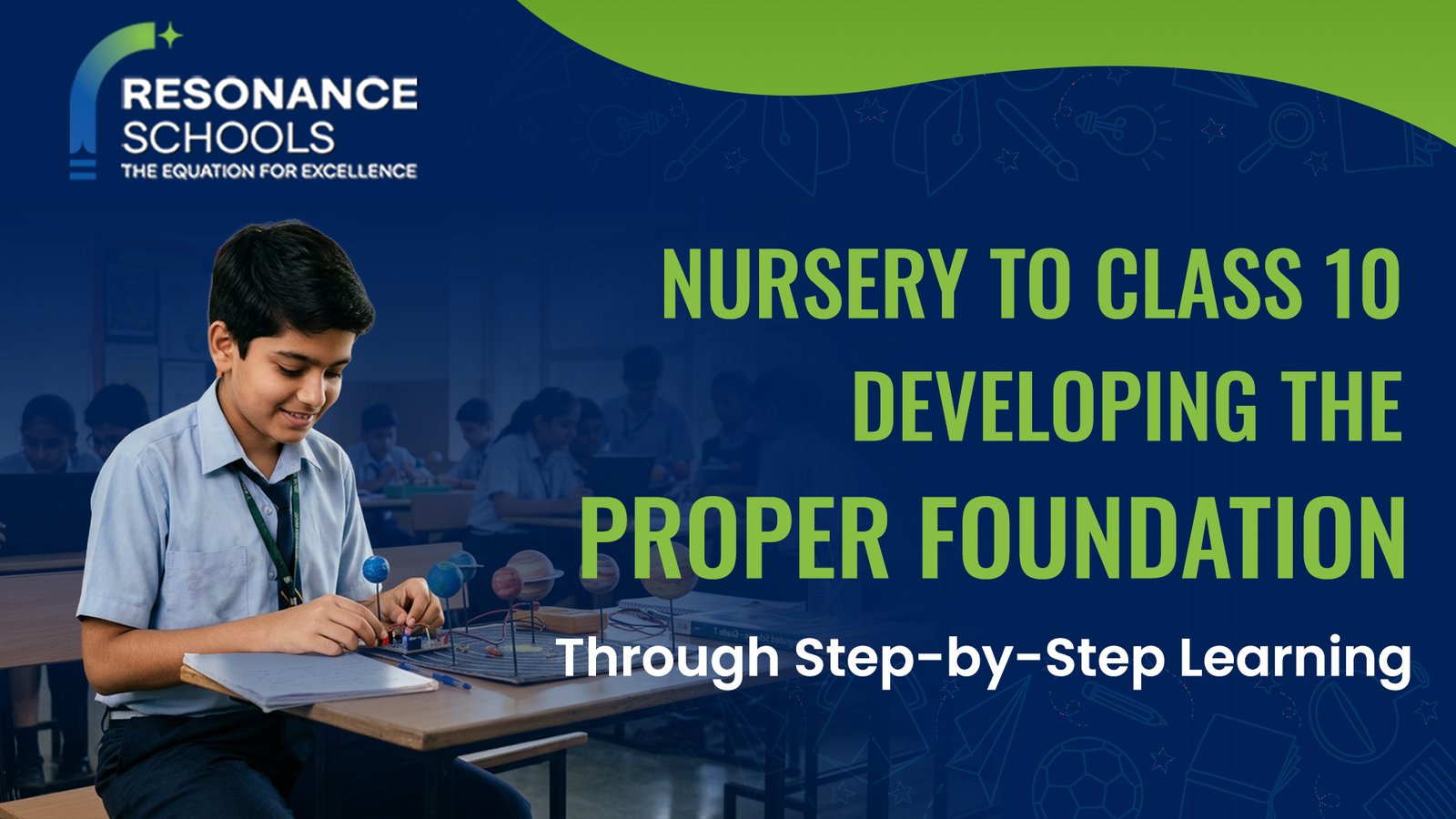
Strong Foundations from Nursery to Class 10 for Lifelong Success
We all know education is not a one-size-fits-all journey. A four-year-old does not learn like a ten-year-old. Similarly, a teenager getting ready for high school requires a different environment than a child who is just starting to recognize letters and sounds. Therefore because of this growing need, an age-appropriate right foundation is a must for all children.
From Nursery to Class 10, each year contributes to building not only academic knowledge but also curiosity, confidence, values, and life skills. When these stages are thoughtfully designed, education becomes a path of overall development rather than just exam preparation. But what foundations must be built and by when?
Early Years Are The Root of Curiosity
The early years of schooling are not about textbooks and exams. They focus on discovery, joy, and routine. At this stage, children learn how to interact with the world around them. Circle time, storytelling sessions, music, art, and outdoor play are not just fun activities; they help children develop confidence, communication, and curiosity. When these years are handled well, children enter primary school ready to learn and excited about education. Their brains develop quickly, making this the perfect time to build fundamental habits and skills. A strong early education environment should emphasize on:
Language development through stories, rhymes, and conversations
Basic numeracy through playful activities
Social interaction and group learning
Physical development through movement and play
Emotional growth through positive classroom routines
Primary Years Bridge Curiosity and Practicality
Once children are ready to learn, the next stage focuses on building strong academic foundations. The primary years are crucial because this is when students begin to grasp core subjects such as:
- Language and communication
- Mathematics
- Environmental studies and basic science
- General knowledge and awareness
However, modern education stresses that primary education should go beyond memorization. The goal is to foster understanding and thinking skills. Effective primary classrooms encourage asking questions, grasping concepts instead of rote learning, collaborative learning through group activities, exposure to creative subjects like art, music, and drama and physical fitness through sports and yoga.
This stage also plays an important role in forming learning habits, discipline, and curiosity. When students learn how to think and solve problems early on, they gain the confidence needed for more complex academic challenges later.
Secondary School Helps Expand Thinking and Skills
As students enter middle school, their ability to analyze and reason grows rapidly. At this stage, education must transition from merely learning facts to a deeper understanding of concepts and their applications in various contexts. Subjects become more structured, and students explore:
- Advanced mathematics and science concepts
- Social sciences and global awareness, Subject mastery
- Language proficiency and communication skills
- Technology and digital learning tools
- Olympiads and competitive exams
- STEM-focused learning
Middle school is also when students begin to develop independent learning habits. Schools that prioritize overall development introduce club activities and competitions, public speaking and debates, innovation projects, technology-based learning and team sports and leadership opportunities. When students receive proper guidance during this stage, they build the confidence and clarity needed for higher education and future careers.
Why a Stage-Wise Learning System Matters
Children grow and learn differently at each stage of their development. Schools that design their learning systems for different age groups help students gradually and effectively build skills. This stage-wise approach helps children grow into confident learners, critical thinkers, and responsible individuals. Modern education should also focus on the holistic development of students, sports and physical fitness, value education and life skills, creativity through art, music, and drama, technology-enhanced learning and leadership opportunities and teamwork.
Right Foundation: The Resonance School
In this fast pacing tech world, schools must move beyond traditional models to create learning environments that blend strong academics, values, creativity, technology, and personal development. This is the philosophy behind the learning approach at Resonance Schools. At Resonance Schools, the students get an opportunity to experience a progressive learning process from nursery up to class 10, which helps them develop strong foundational skills, critical thinking abilities, and prepare for their future careers. Because true education is not just about passing exams. It’s about shaping confident learners, capable thinkers, and responsible individuals ready for the future. As parents, if you relate to this, come visit us to know more.
Frequently Asked Questions
Find answers to common questions about Resonance Schools