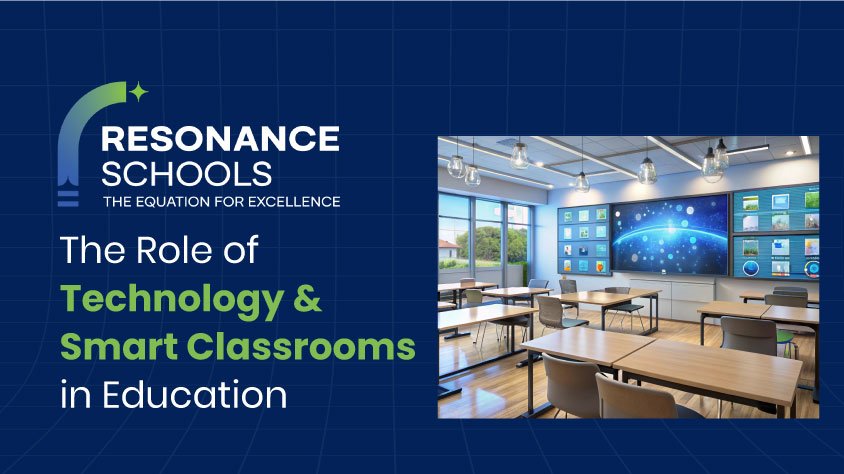
Smart Classrooms in Modern Education India
Technology is no longer a luxury in education; it's a basic need. Today’s children are growing up in a digital world. From smartphones to AI tools, everything is powered by technology. Naturally, schools must evolve as well. In fact, smart classrooms in schools in India are slowly becoming the new normal. In the past, learning meant blackboards, chalk, notebooks, and memorising answers. Today, it means understanding concepts, applying knowledge, and thinking critically. Technology plays a big role in this shift.
From Memorising to Understanding
The older generation was told to memorise everything. Teachers used to say, "You won’t have a calculator in your pocket." But today, every child carries a calculator, a dictionary, and an entire library in their pocket.
So what changed? The need for blind memorisation has decreased. Instead, schools now focus on: Concept clarity, logical thinking, application-based learning and most importantly, the autonomy skills. This is where the role of smart classrooms in education becomes important.
Smart boards, digital content, live quizzes, and real-time assessments make learning interactive. Instead of copying notes, students see animations, simulations, and real-life examples. They understand faster and remember longer.
Easy Access to Information
Students no longer need to wait to visit a library. They can instantly access updated information, research papers, videos, and explanations. Although there might me con-side of it, with mentorship like teachers at Resonance School, students can be guided on what info is appropriate to consume.
Better Engagement
Gamified apps like quizzes and live polls increase class participation. Even shy students can respond digitally without fear. It also helps in visually imagining and understanding concepts on self.
Learning at Own Pace
Recorded lectures and digital modules allow students to revise anytime. If a concept is difficult, they can rewatch and relearn.
Career Readiness
In the real world, everything is digital, from presentations to reports and meetings. Schools that use technology prepare students for this reality. Digital tools provide translation, audio reading, spell check, and grammar support, aiding different types of learners.
Improves Interactiveness and personalization
This creates a true digital learning environment in schools, where education is not limited to textbooks. Through tech learning collaborations can take place, students share ideas, give suggestions and even critical improvements.
How is ResoSmart helping bridge the tech-student-teacher learning?
After lockdown, many students experienced digital fatigue. Some teachers noticed engagement increased again when whiteboards and physical activities returned. Poster-making, drawing, and hands-on projects also develop planning skills, sometimes even better than digital slides.
So the goal was not just digital. The goal is the right mix of digital and practical. Where: Every student answer’s quiz questions in real time, teachers get instant performance tracking, learning gaps are identified immediately and personalized academic support is provided. Students are offered: Recorded lectures for revision, Computer-Based Tests (CBT), Digital monitoring systems, Technology-enabled assessments and more as part of the curriculum
This shows how a digital learning environment in schools should function, not just screens, but structured integration. Modern education goes beyond grades. It aims to prepare students and truly shaping future-ready learners. Technology is not replacing teachers. It is strengthening them. Smart classrooms are not about fancy screens. They’re about smarter learning.
FAQs
1. Will technology reduce the importance of teachers?
A. No. Technology supports teachers but does not replace them. Teachers guide discussions, clarify doubts, mentor students emotionally, and ensure students use digital tools properly.
2. Does too much screen time affect students negatively?
A. Yes, excessive screen time can cause eye strain, distraction, and digital fatigue. That’s why it’s important to have a balance between digital learning and physical activities.
3. Are smart classrooms expensive for parents?
A. It depends on the school’s setup and model. Some schools include technology costs in regular fees, while others may charge extra for lab access or digital resources.
4. Can technology help improve exam performance?
A. Yes, tools like instant quizzes, performance analytics, and personalized revision plans can help identify weak areas early, leading to better results.
5. How secure is student data in digital classrooms?
A. Schools usually use secure platforms with limited access. At Resonance, we give high importance to data privacy policies and safety measures for digital environments.