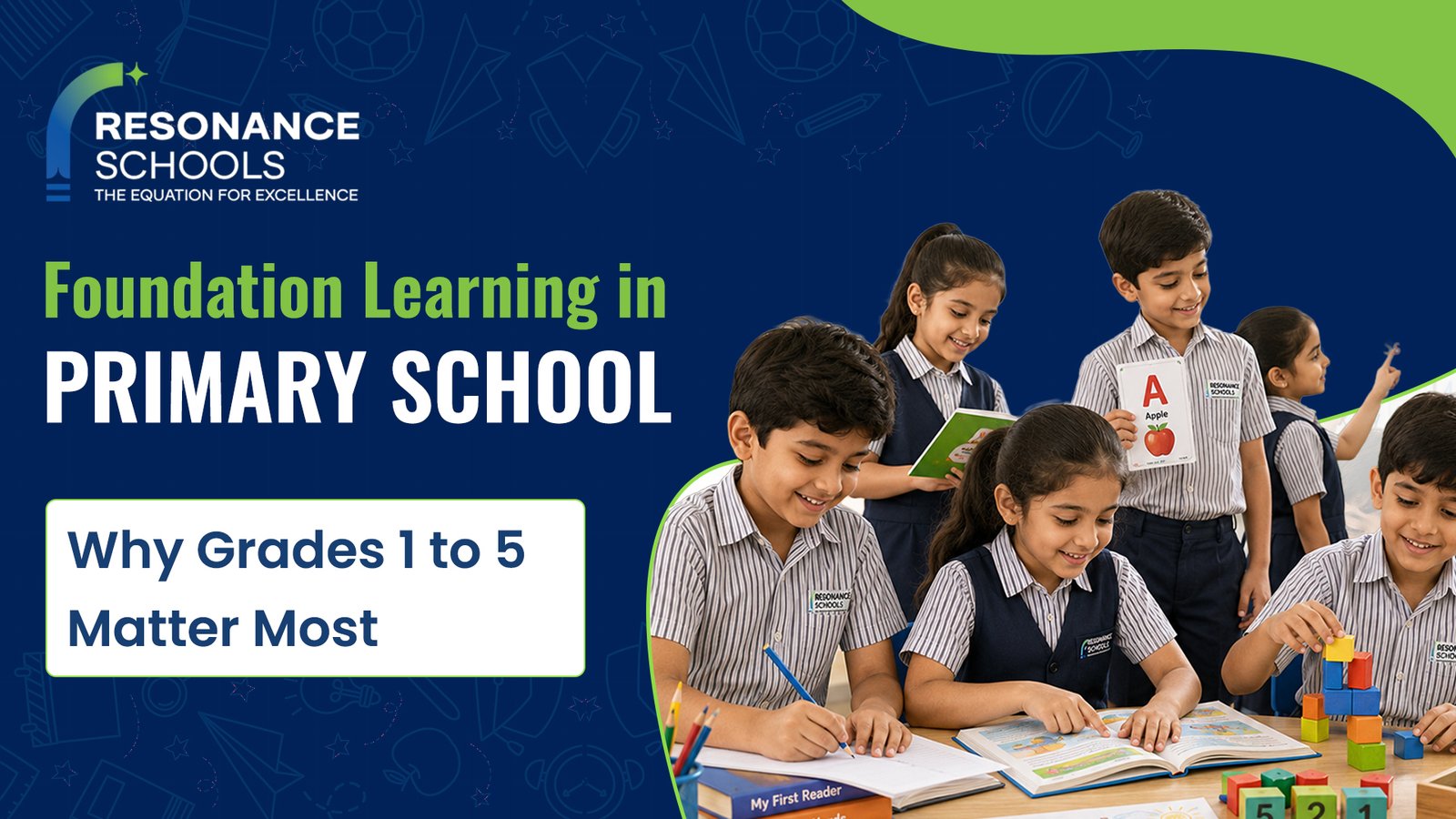
Foundation Learning in Primary School: Why Grades 1 to 5 Matter Most
The first years of a child’s life are one of the most transformational. We view the first years not just as continuations of early schooling, but as “The Supportive Foundation,” the building blocks of a child’s curiosity and ability to enter the learning arena with a solid academic foundation. Knowing why grades 1 through 5 are important is an important consideration for parents wanting their child to move beyond being “ready for school” to becoming confident, capable, and lifelong learners.
Establishing a Strong Academic Foundation
The foundation of all future achievements depends upon a strong academic foundation. For our primary school children, they are taught about the "Basics and Scholastics," which we call Listening, Speaking, Reading, Writing; English; Mathematics; Science/EVS. While other schools may focus on rote learning, we use the concept-based learning method for our primary school curriculum in Hyderabad so that students learn the "why" behind every lesson. By starting with these basics early in life, children are prepared for the higher levels of academic challenge of secondary school.
Developing Reasoning and Analytical Thinking
The Resonance BRIDGE curriculum is an important reason. During these years, our children will develop their skills in thinking and reasoning. With our BRIDGE program, we don’t rely on textbooks to help teach the mind to think clearly. We use the “Reasoning & Inquiry” component to challenge our students with tasks that require independent thinking and analysis. This early exposure to analytical thinking prepares students for the specialized Olympiads and JEE/NEET preparations that follow. Parents have asked how they can help their child improve his basic skills.
Building Communication and Life Skills
The first two years are also the time for optimum growth for developing communication and interpersonal skills plus confidence. Primary school foundation education enhances the core values of caring and sharing and builds the foundation for creating responsible global citizens. Children are motivated to participate in various co curricular activities including clubs, competitions and house competitions.
Digital Ready and Future skills
We have realized that the primary school basics should include digital readiness because kids need to acquire future ready skills. Computer literacy, ICT360 and even financial literacy concepts are taught at an early age so that kids can grow up being digital natives. The combination of futuristic and traditional academics builds a new generation of learners who can operate in a future ready world.
Helping in developmental changes:
These years a child also develops physically & emotionally, becoming into a teenager. The teachers are trained in such a way at Resonance that make sure that children are able to transition from the wonderful discovery of the ROOT Framework into the excellent 8 Foundations Framework. Inquiry-based learning is encouraged more in these years.
For the middle years each experience must be unique and it must matter. And we make it possible at Resonance. Pedagogy is challenging, contextual, inclusive & responsible. Come and visit the campuses, meet our counselors and give an opportunity for your child to explore, learn and celebrate these crucial years.
Frequently Asked Questions
Find answers to common questions about Resonance Schools